Get a quote

AI Consulting · Tuzla

AI Consulting for Tuzla businesses

Heavy manufacturing does not leave a boundary open to argument. If a weld radiograph in an Aydintepe workshop is read on a light table, everyone knows whose call it was. So the first question when a model enters the conversation is the same one: which step is a measurement, and which step is a judgement? Vipkurum's question cropping tool already answers it in code. OpenCV cuts, the language model matches and writes, and the two jobs never pool.

AI Consulting — Tuzla

Shipyard and heavy industry work around Tuzla cuts the day into shifts, so a second crew sits down at the same job and the origin of a decision has to survive in the record rather than in someone's memory. That is where AI consulting starts for a Tuzla plant. The work closest to this district's sector profile is Vipkurum's question cropping tool. It was written for exam content. We have nothing that reads a weld radiograph, a non-destructive testing image or a defect on a line, and we do not pitch one. What carries across is the division of labour itself: which step stays measurable and which is handed to a model. Python and OpenCV cut, Gemini and OpenAI match, Node.js links the service to Laravel, and MongoDB holds the records.

  • The cut is made by image processing, so the same page is divided the same way every run instead of resting on what a model guessed the boundary was.
  • Judgement sits apart: the model attaches the key's answer to its question and writes new ones from existing examples, without touching the cropped image.
  • What falls outside is stated as plainly: weld radiographs, non-destructive testing images and line defects are not part of this work.

Why Algoriel

  • The image does the reading

    Vipkurum reads optical form marks with OpenCV from the image of the sheet, not through the optics of a reader appliance.

  • Cropping apart from judgement

    Image processing decides where a question begins and ends; the language model only binds the answer to it. The two jobs never mix.

  • Model output lands in a record

    Vipkurum writes the answer key into the cropped question's own record instead of keeping it as a separate document.

  • A person has the last word

    At Tahlil.com the model drafts the reading and a doctor approves what reaches the patient; an unapproved reading never appears on screen.

What we build

AI Consulting
  • Where no model is needed

    Marks on an answer sheet are read from the form image itself; the threshold that decides whether a bubble counts as filled sits in the code, and no language model runs in that step.

  • Splitting the job in two

    Computer vision sets the question boundaries; a language model then ties each answer in the key to its question. Cropping accuracy never rests on a model's interpretation.

  • Removing the hardware step

    Marking stops depending on a reader device; when the form layout changes, we adjust the reading service in software instead of ordering new hardware or device-specific forms.

  • Turning existing material into a pool

    A booklet page is split into individual questions, the answer key is written onto each question's own record, and the questions already on hand become the pattern for new ones.

  • Tying the output to a person

    At Tahlil.com AI prepares the first reading, a specialist physician writes and approves the interpretation, and responsibility for the text that reaches the patient stays with the physician who signed it.

  • Queueing the generation

    In Secretum text and images come out of two separate generation paths; image generation is not instant, so that work goes onto a queue, and the finished file is stored once instead of being regenerated in the feed. Secretum is the product we are building now.

Work like this

AI Consulting · Case study

Vipkurum question cropping — cutting stays in vision, judgement stays in the model

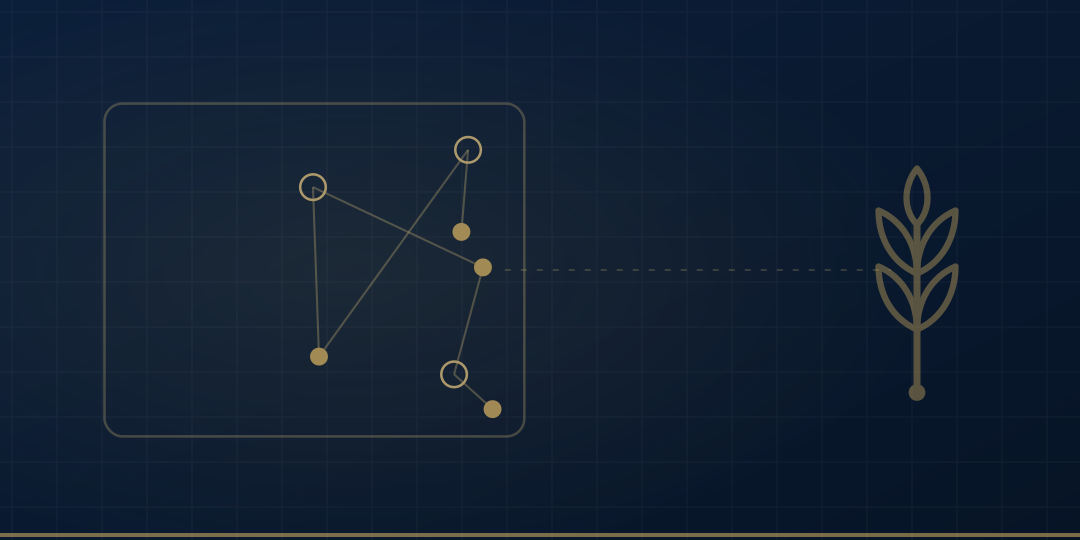
Vipkurum's question cropping tool splits the work in two from the start. Python and OpenCV divide a booklet page into single questions: that step is measurable and is never put to a model. Gemini and OpenAI attach the key's answer to its question and write fresh ones from existing examples: that step is judgement. Because the two never pool, a bad reading from the model cannot corrupt a cut, and a fix on the cutting side does not restart the judgement. Cropped images and question records live in MongoDB, and the Python service reaches Laravel over Node.js. The context is exam content, not industrial imagery.

Read the case study →

Working with Tuzla teams, remotely

We have no office, so work for this city runs remotely and we do not offer on-site support. What was done, and why it was done that way, stays in writing. The project pages mark which builds came out of a partnership.

  • The first release ships as a working piece; extras follow later.
  • Every client we know of is in Turkey.
  • Decisions stay in writing; progress shows in working screens.

Frequently asked

  • Could a model read our weld radiographs or inspection images?

    We have never built that, so we have no evidence to put in front of you. What we can explain is the division between image processing and a language model: which step is measured and which is interpreted.

  • Models are said to guess. Does the same input give the same result?

    That is exactly why the split exists. Cutting stays in image processing, so a page is divided identically each run. Variation is confined to the judgement side, and what the model produced there is visible on the record.

  • A shift hands over and another crew takes the job. What does this split buy them?

    The record shows which step produced what. The incoming crew does not reopen the measured part and only reviews the judgement. If the two jobs were pooled, everything would have to be checked again.

  • Would you not need to come to the site and see the line?

    We keep no office and work fully remotely. Rather than watch a line, we first write down which step is produced by measurement and which by judgement. If that boundary is not on paper, software cannot hold it either.

Let us look at which step needs a model and which one needs computer vision.